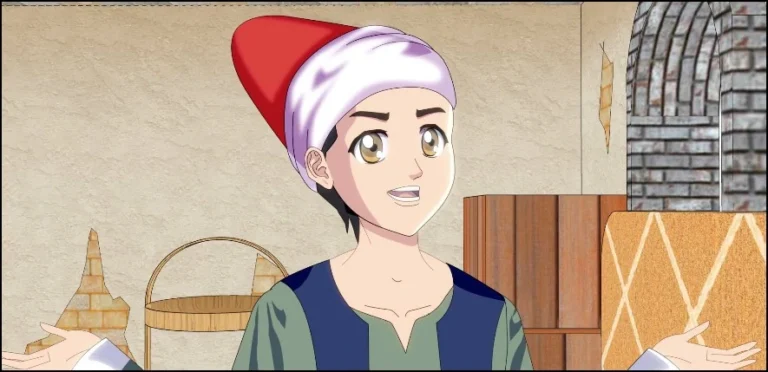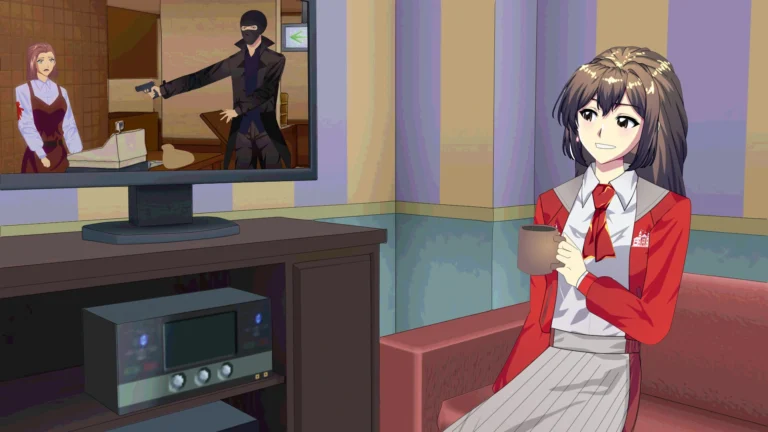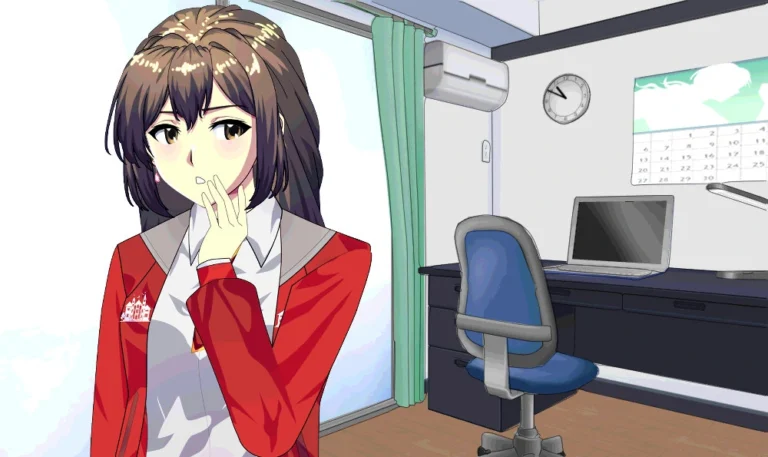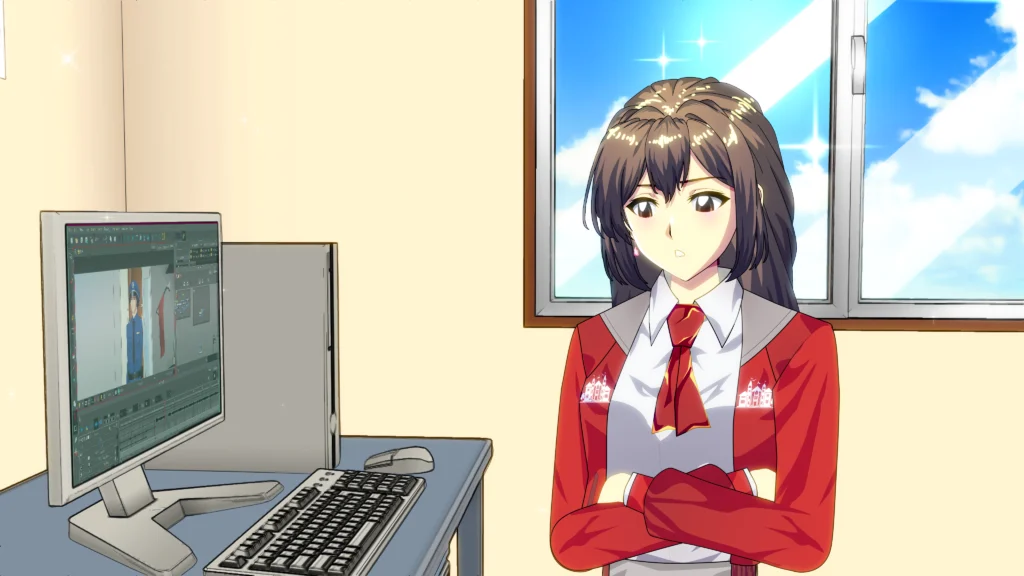
Hello and welcome to all my friends and blog followers! In this article, we'll discuss the reasons behind the popularity of anime and why Japanese studios use low frame rates despite simple and limited animation. Many might think that a high frame rate equates to a powerful work, but reality has proven that Japanese anime has broken this rule. The secret lies in several factors, the most important of which I will mention in this article, so keep reading.
My online store has everything you need as artists
What do we mean by limited movement here? And why is it used in the first place?
Limited animation is a technique that relies on reducing the number of frames, or at least using partial animation, instead of animating all elements in the scene. I will give you some examples:
• Only the eyes move while the character remains still.
• Moving the mouth alone while speaking.
• Moving the camera while the characters remain motionless.
These things give a sense of movement, but without actual movement, which is a technique I use a lot in my work.
Japanese studios have used these techniques for decades, and they've been successful. Perhaps the main reasons for this success are their smaller budgets and tighter timeframes compared to American productions. Over time, however, this has become a distinctive artistic signature of anime, and I personally loved it and emulated it in my early days in animation. It even helped me save time and effort by reducing the frame rate, as I mentioned earlier.
How do they compensate for the lack of movement with directing or special effects?
Herein lies the secret: the power of anime doesn't lie solely in animation. Other elements contribute to its success, including directing. I can't deny that strong directing has been a major reason for anime's popularity. They choose camera angles meticulously, focusing on facial expressions, eyes, or hands to convey the message without needing extra frames. This, in itself, is what made me fall in love with anime, to be honest.
For example, fight scenes are usually the ones that most require special effects because they are physically demanding. Effects are added to reduce the effort required, creating the illusion of epic action, but in reality, they might include elements like blazing fire around the characters, sparks, or lightning flashes. Even the camera's speed in rotating and panning around fighting characters enhances the visual appeal of the scene, a feature clearly evident in shonen (action) anime.
The story, characters, and emotions play a greater role than the framework.
It's well known that every anime has a unique and original concept, like Dragon Ball and others. The reason, as we know, is the story and the clever plot surrounding the characters. When you're looking for an anime, you don't ask about the best animation; you ask about the story first. This shows that the story plays the most important role in an anime as a whole.
Despite the abundance of anime about football, works that require the animation of a large number of players, each anime possesses its own unique identity. While the animation process can be demanding, many scenes focus on the protagonist's life story, allowing us to delve into their psyche, which makes us become attached to the story and forget about the animation itself.
What can we learn and benefit from this experience?
The Japanese school of animation offers us an important lesson in building our own artistic identity without being entirely influenced by Western styles. Based on their budget and their unique culture, they created their own distinctive style of animation, and we can do the same.
The life of an Arab mangaka: Organize your time between drawing and life.
For example, due to my busy schedule and limited time, I found a style that suited me best: drawing in an anime style with Western-style animation, using rigging and bone-animation techniques instead of hand-drawing each time. It's a practical and useful method. I don't claim to have invented it—many have done it before—but at least I managed to combine more than one style.
In conclusion, I want to tell you that animation is an art, and art knows no bounds. We can explore and develop our own animation styles, either by combining different methods or creating entirely new ones from scratch, to stand out from the rest. Thank you for reading, and I hope to see you again soon.