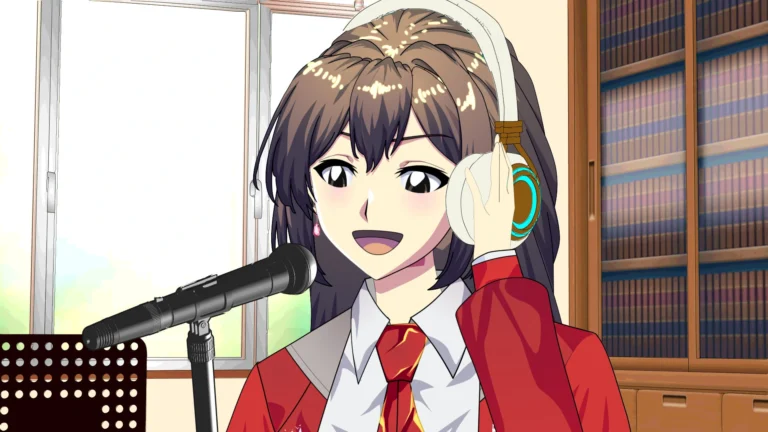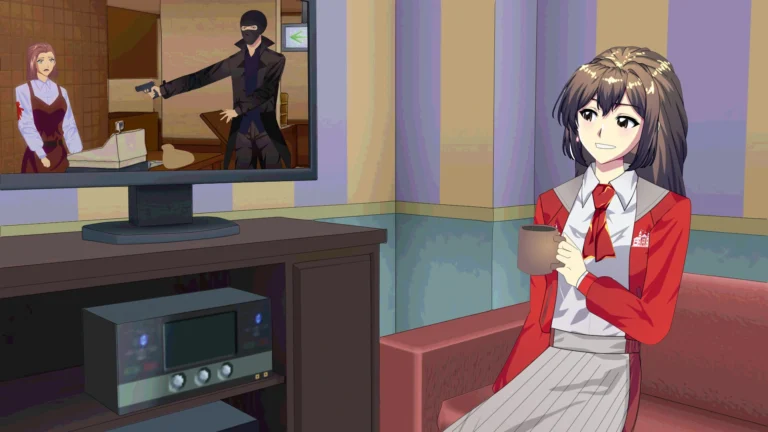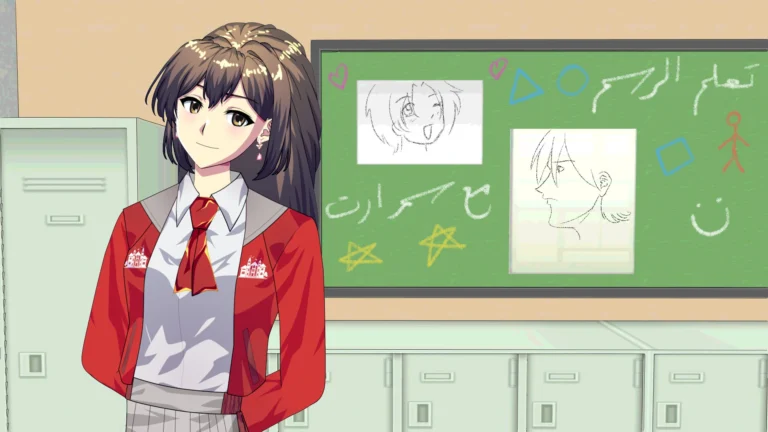
I've always had a question: Is the anime industry only for Japanese people? Is it really impossible? Anime production With their distinctive style outside of Japan? Especially when I see many who love this art like me, wanting to create it but holding back because of fear of comparison or criticism.
Recently, I came across a video of someone saying that "no one but the Japanese should make anime," and I felt suspicious and rejected it, because I believe that Anime production It's not exclusive to one country or culture. If you love this art and want to master it in your own style, nothing is stopping you.
My personal answer to you and to every artist aspiring to enter this field: Yes, we can make anime. The Japanese have not prevented anyone from being inspired by or imitating this art. On the contrary, we have never heard a statement from major studios preventing others from making anime or imitating their style.
The real question here is: why do some people feel bothered by others trying to imitate this art when they themselves are not Japanese? In my opinion, Anime is now a global art form.It transcended the borders of Japan and reached every home and every country, even overshadowing many forms of American cartoons because of its attractive characters, wide eyes, silky hair, and perfect features that capture the heart.
Moreover, the anime is distinguished by its style Unique movement It distinguishes itself from other types of animation, as the focus is on highlighting emotions through facial expressions, with occasional little movement, instead of continuous movement as in Western cartoons, which gives it that special cinematic touch.
Through watching many works, I've noticed that every region in the world has its own unique style of animation and art, even if it's not Japanese. I remember watching the European series "Yolanda" as a teenager, and how I realized from the very first moment that it wasn't American or Japanese, but rather had a simple art style and distinct animation that reflected its cultural identity.
And here lies the important point: We will not make an exact copy of Japanese anime no matter how hard we try, but we will create our own style that bears our signature.
Difference is the secret to creating successful anime.
It is true that we learn from Anime production We draw inspiration from the Japanese style in character development, backgrounds, and camera angles, but we bring our own unique flavor when we begin drawing and animation ourselves. Whether our animation is faster, our characters move more while speaking as in American cartoons, or we rely on a static scene with specific movement as in Japanese anime, it all reflects our distinctiveness and creativity.
We need to build Our unique style in anime productionA style that makes the audience recognize us from the first scene, just as you recognize the works of Studio Ghibli from the touch of colors or the movement of the wind in the leaves, or the works of Makoto Shinkai from the reflection of light and bright colors.
The beginning may be through imitation and study, but the real goal is to develop a style that makes our animation different and unique.
Arab production is not impossible
An Arab animation industry is not a distant dream; it is possible and achievable if the determination and awareness of its requirements are present. It is not exclusive to Japan or the West; rather, it can be transformed into a reality that serves our Arab culture and values in a modern and engaging way. One of the primary reasons that makes an Arab animation industry possible is the availability of advanced technologies and software that are now accessible to everyone, such as Toon Boom Harmony و Clip Studio Paint EXEven open-source software helps any artist or small team produce animation clips of acceptable quality, with smooth animation capabilities and the ability to easily add sound and visual effects.
Secondly, there is a great abundance of Arab talents who have the ability to draw in the anime style, and many of them have even reached a professional level, whether in digital drawing, animation, or background and effects design. With organized work teams, tasks can be distributed to facilitate production without the need for huge budgets as in Western and Japanese works.
Third, the rich narrative content in our Arab culture is available. We have many stories, legends, and folk tales that are suitable to be the basis for a distinctive Arab anime, with the possibility of presenting modern stories that address issues of identity and societal values in an attractive way for children and teenagers, which ensures the continuity and constant renewal of the work without the need to copy Japanese or foreign stories.
The fourth reason is the growing awareness among the Arab public of the value of animation, as there is now a wide fan base that loves anime and follows it passionately, and is looking for Arab works that compete with foreign works. This awareness opens the door for the public to support new works, whether by watching or by providing financial support through platforms.
Fifth, digital publishing platforms, YouTube channels, and social media offer an opportunity to distribute Arabic works without high streaming costs. A dedicated audience can be built quickly if the work is of acceptable quality and has an engaging story. Finally, a key factor making the Arabic animation industry possible is the potential for collaboration among Arab creators across various fields, from scriptwriters and designers to programmers and composers. This collaboration allows for the creation of integrated works without relying on imports, fostering self-confidence and paving the way for an independent Arabic animation industry that reflects our culture and identity while also possessing global appeal if approached intelligently and creatively.
Remember, Anime production It's not impossible outside of Japan. There are many individual projects and small groups around the world who have successfully produced anime-style works and achieved great success, from America to Korea to the Arab world.
You too can do that if you want to. The most important thing is to create what you love and stick to your own style, because true art stems from passion, not from fear of criticism.