Hello, my creative friends! Today I'll be talking about a topic that many don't discuss: dubbing anime from home. In the world of animation, it's not just about movement; the characters don't come to life unless you give them your voice. Voice is the key!
If you're someone who works from home like me and wants to add semi-professional dubbing to your anime and cartoon projects, then you've come to the right place. Today, I'll guide you on how to dub from your home. While my expertise lies in animation and I utilize other voice actors, that doesn't preclude me from helping those who both animate and dub. Especially since you won't need professional equipment or a fully equipped home studio; all you need are the tools and software I'll mention, and you'll be ready to go. Ready? Let's get started!
My Pinterest account to see all about my work
The required tools are as follows:
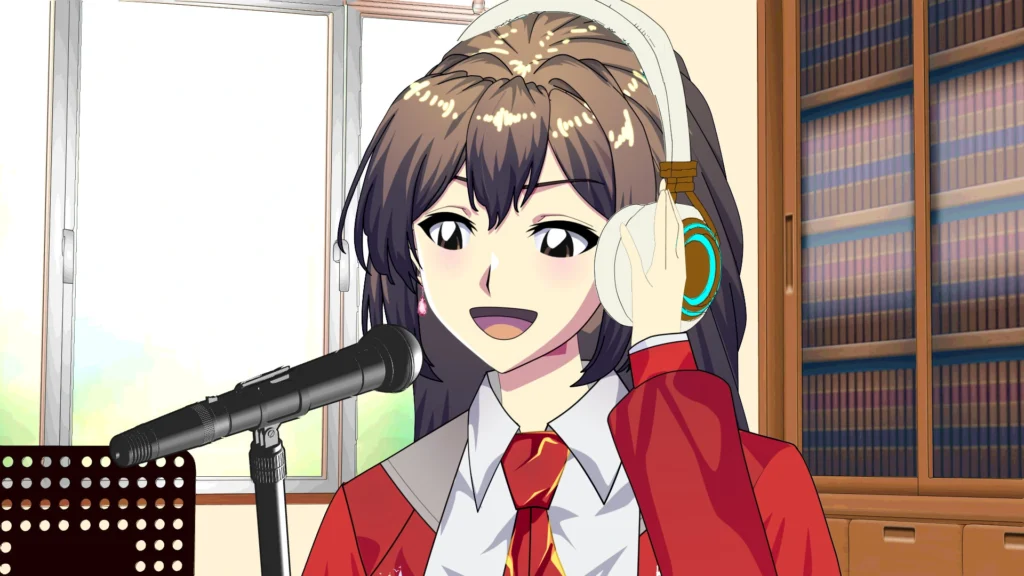
- Good USB microphone Like the Audio-Technica AT2020 or Blue Yeti, they give you pure sound.
- Free voice recording software For example, Audacity, or you can use Adobe Audition or Reaper to control recording and audio editing.
- closed-circuit headphones Like the Audio-Technica M50X, you can hear the details clearly.
- A quiet place in the house with simple sound insulation Using blankets or foam boards to prevent echo and noise.
Important advice: Make sure the microphone is positioned at mouth level, and use a pop filter to maintain clear, distortion-free sound.
To achieve an audio result similar to anime
- Do voice warm-up exercises, such as humming or moving your lips and tongue.
- It is preferable that you be seated during the recording.
- Try recording several versions in different performance styles (e.g., faster, slower).
- Do not try to imitate Japanese anime dubbing, so that you can relax during the dubbing process.
- It is essential that you avoid breathing into the microphone if you are recording on your phone.
Read the script before starting to dub the anime.
Professional anime dubbers, such as “Studio Venus Center”, known for its professional dubbing, read the script and understand the scene from all its aspects, so that they can grasp the context of the text and the emotions required in it. This is what made their dubbing, especially in their early days and up to 2010, very distinctive.
Therefore, focus on the dialogue, understand the general atmosphere of the scene, and the impressions you will need, and try to dub even before recording, so that you understand the mistakes and avoid them later.
Some might prefer to memorize the entire text, especially if it's short, but that's unnecessary. Whether you memorize it or not makes no difference; what matters is the performance, not the memorization—it's not an exam.
Adding effects and music
Incomplete Anime dubbing Without sound effects and music:
- Clean the audio of any noise or distortion using Audacity or Audition.
- Add sound effects such as footsteps, wind, doors or people voices via sites like Freesound.org.
- Choose free music from YouTube in an anime style that suits the atmosphere of the scene, and make sure to adjust the sound levels so that the voice is clearly above the music.
- After completing the merging, export the video in MP4 or MOV format in high quality.
Practical tips while working on anime dubbing
How to dub the anime you created with your voice | Illustrated explanation
- Record in short sessions to avoid straining your voice.
- Save the project files in a numbered and organized manner in a separate folder.
- You need to take a short break and drink water to stay alert.
- Watch some dubbing videos on YouTube in the language you are performing in to understand the required performance.
These were my thoughts and advice to you as dubbers working on anime dubbing from home. Since I have some modest experience dubbing anime and cartoons from my early days, I understand what's required. Also, my experience watching Spacetoon's shows, which always featured the dubbing of my favorite "Venus Center" series, helped me develop an "artistic" ear, so to speak, allowing me to understand the required expressions, performance, and pronunciation. And that's what this article came about.
Try these tips, and I'm sure you'll learn and gain enough experience on your own, especially if you're working on an anime film or series. Participating in dubbing it will increase your pride in the project. And I mustn't forget to remind you to seek help from voice actors, whether friends or online, to gain access to a wide variety of voices for the anime characters. I hope you benefited from my advice, and I'll see you soon, God willing.