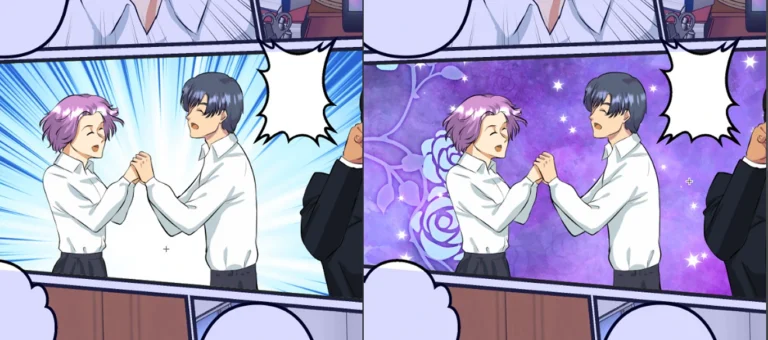
Today we'll discuss how to practically add tones to characters in your manga scenes. Having previously learned how to create a story, design characters, and arrange scenes, we've now reached the final drawing stage and adding tones to the artwork. This stage is crucial because it adds shadows and details to your drawings, allowing the reader to become immersed in each painting and scene. So, let's begin.
My online store has everything you need as artists
First step
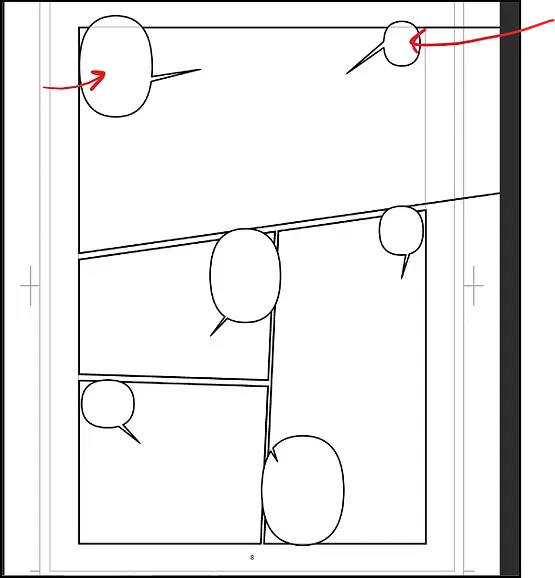
- Before we begin drawing, it is very important to leave spaces for the dialogue balloons within the scene.
- First, we add the panels. Panels And their arrangement on the page is according to the sequence of events.
- Then we add dialogue bubbles in all scenes with precision.
- You can find out the types of balloons suitable for each scene from previous lessons.
program Clip Studio Paint It does not support writing in Arabic yet, so I personally add the text using Photoshop and copy it to the program after I finish drawing.
Step two
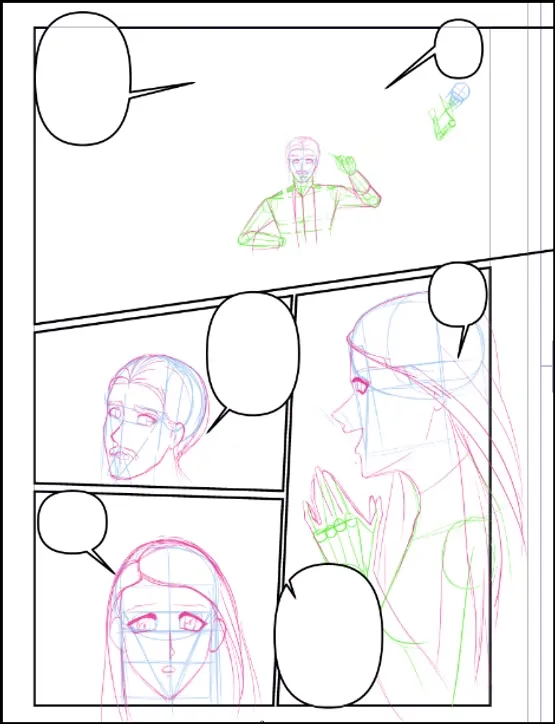
After we finish adding the panels, we start drawing the basic sketch of the scene based on the written script, then we choose our preferred inking tool or pen to start drawing the characters and clothes clearly.
- We draw the body (face and skin) on a separate layer.
- Then we dedicate another layer to clothing.
- A third layer of accessories to ensure complete control while adding tones to the characters.
Step three
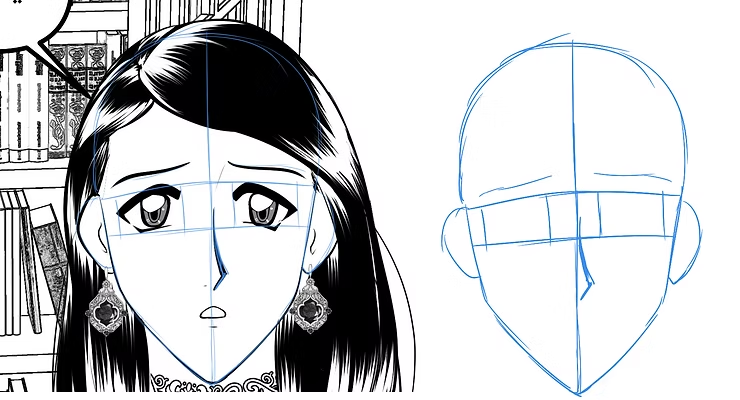
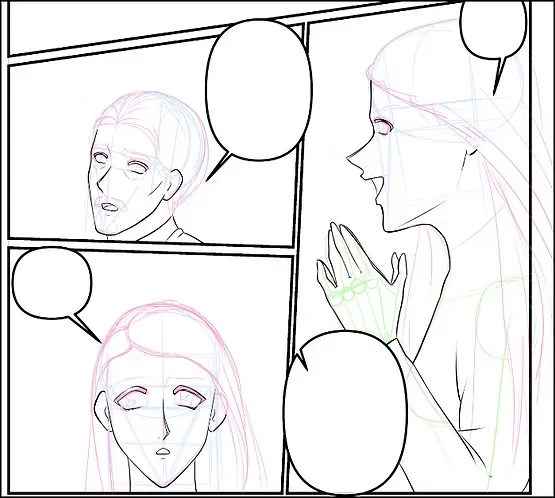
In this step, we draw the facial features with focus, allocating a separate layer for them, making sure that the eyes are not visible, and the nose and lips are small and clean to suit the manga style.
Don't forget to thicken the upper eyelashes, especially when drawing girls, as this adds a touch of beauty to the characters and makes adding tones to the characters more obvious during shading.
Step four
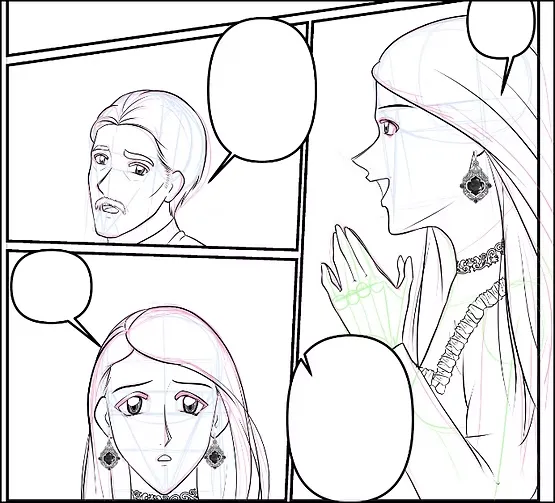
We add a new layer to draw the hair using the same brush but in a smaller size, or you can choose a brush specifically for drawing soft hair, keeping your hand light while drawing and adding some scattered strands so that the hair does not appear flat.
- It is normal for bangs to overlap the eyes, and it is important to draw some stray hairs.
- After completing the drawing of all the character elements, we add accessories such as scarves, earrings, or bags if the character needs them in the scene.
A look at where we've arrived
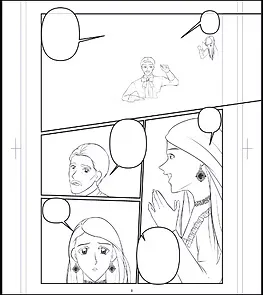
This makes the page completely ready for adding tones to the characters.
Step five
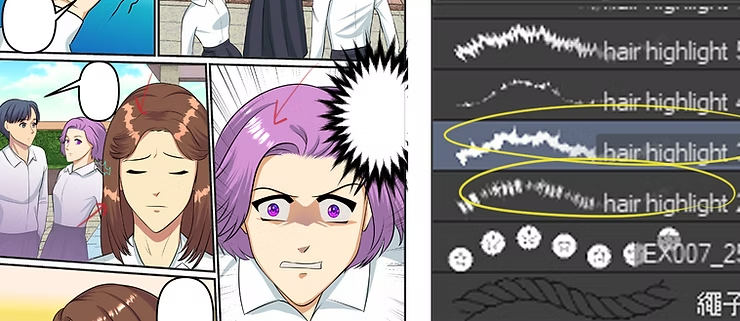
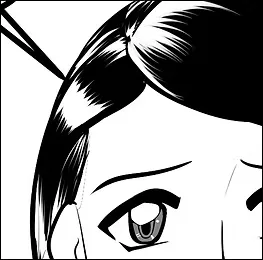
We begin by shading the hair using black or gray, adding a lighter shade to represent its shine. Using a soft pencil, we draw diagonal lines to define the areas of light on the hair, drawing closely spaced lines in different directions to create a natural highlight.
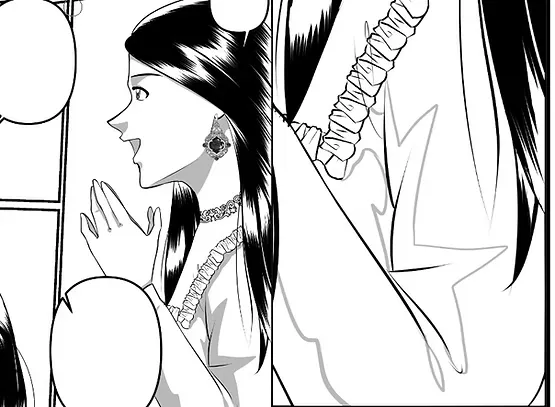
Next, we move on to shading the clothes and other parts using shades of gray, where we define the shaded areas and fill them in using a pen, a classic method that gives the manga a look far removed from visual clutter.
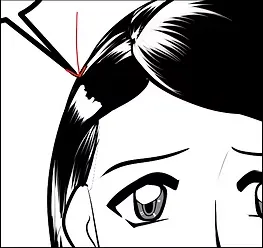
Here we see similar lines, but in the opposite direction, and this is how hair highlights are formed.
Step six
This is the most popular way to add tones to characters in Japanese manga, where we draw with a pen around the edges or folds of the clothes, and then fill them in.
Step seven
After filling out the form, we have several options:
- Let's keep the gray color as it is.
- To convert it into a material using the Effect option.
Shading your manga in three professional and easy ways
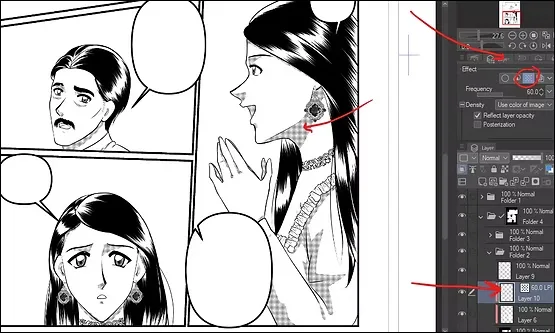
Available Tunes options
Through the options, you can play with the shading however you like, as you can make it smooth or prominent, and this type of shading is the most common in Japanese manga.
Here you will notice that we can control the size of the materials or shading points through the option Frequency .
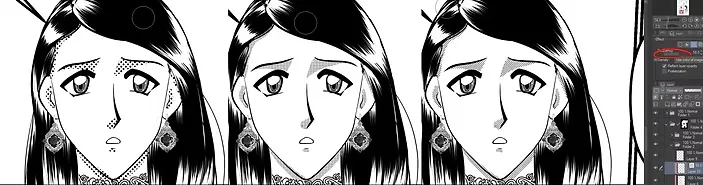
What I prefer
For me, to speed up my work, I rely heavily on coloring only in black on specific parts such as hair and some clothing, but I advise you to try adding tones to the characters completely at the beginning, so that you can choose the method that is most suitable for your style and for the speed that suits your schedule.
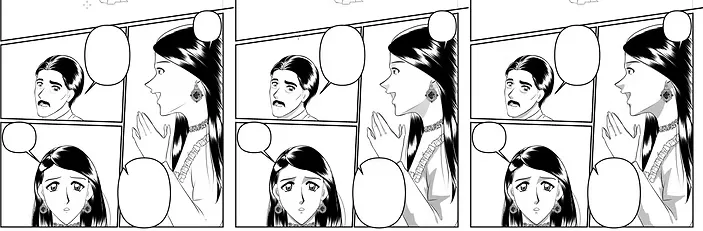
Today we learned how to add tones to the characters in the manga you are working on, and I showed you the methods that most mangaka might use. You are free to try all the methods and then settle on one of them.
Thank you from the bottom of my heart for following the lesson and stay in touch, with the hope that we will meet again, God willing.