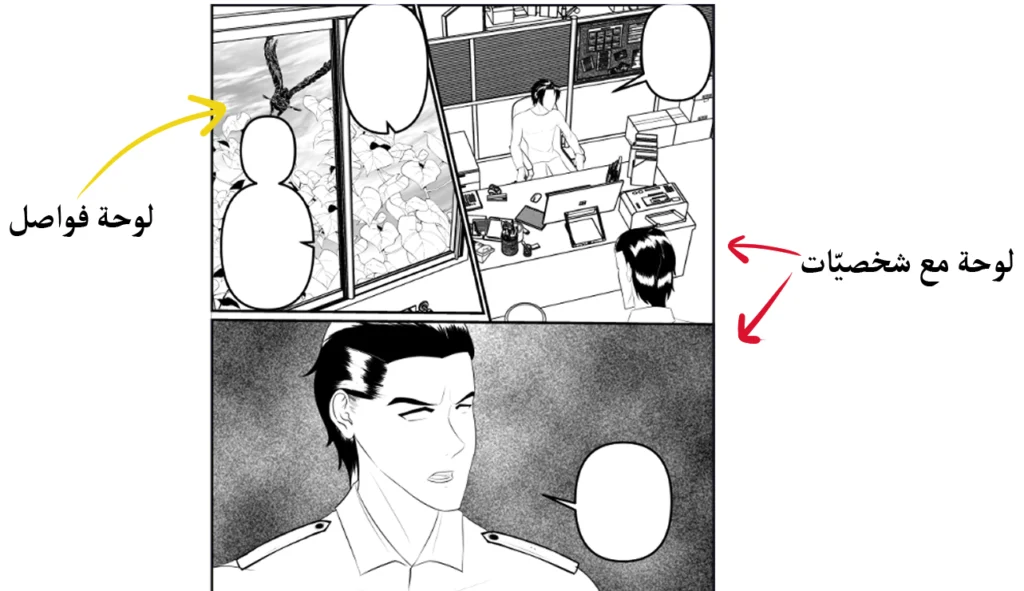
Welcome everyone to a new blog post, in which we will explore the importance of dividers or transitions, in English. Establishing shots / Transition panelsThese are commonly found in manga, webtoons, and Western comics. Many mangaka don't pay attention to them, as they don't contain anything or any event related to the story, but I will show you their importance in this post, so grab a hot cup of coffee, and let's dive in together.
My online store has everything you need as artists
Importance within the chapters
These transition panels are important because they give the reader a visual break. Manga is likely to be heavy and full of important events, and the reader may feel that this is too much for him. These transition panels come as a kind of break, and it is somewhat similar to the advertisements that appear in TV series. From there, readers can breathe a little, organize their thoughts, and understand what happened in a more comfortable way.
How often is it used?
Try to use them in moderation, and don't overuse them so as not to slow down the pace of the chapter. There is no set number of times; it depends on the chapter itself. You should ask yourselves these questions:
- How many pages?
- Are there transfers between different locations?
- Are there any emotional or tragic scenes in this chapter?
landscapes
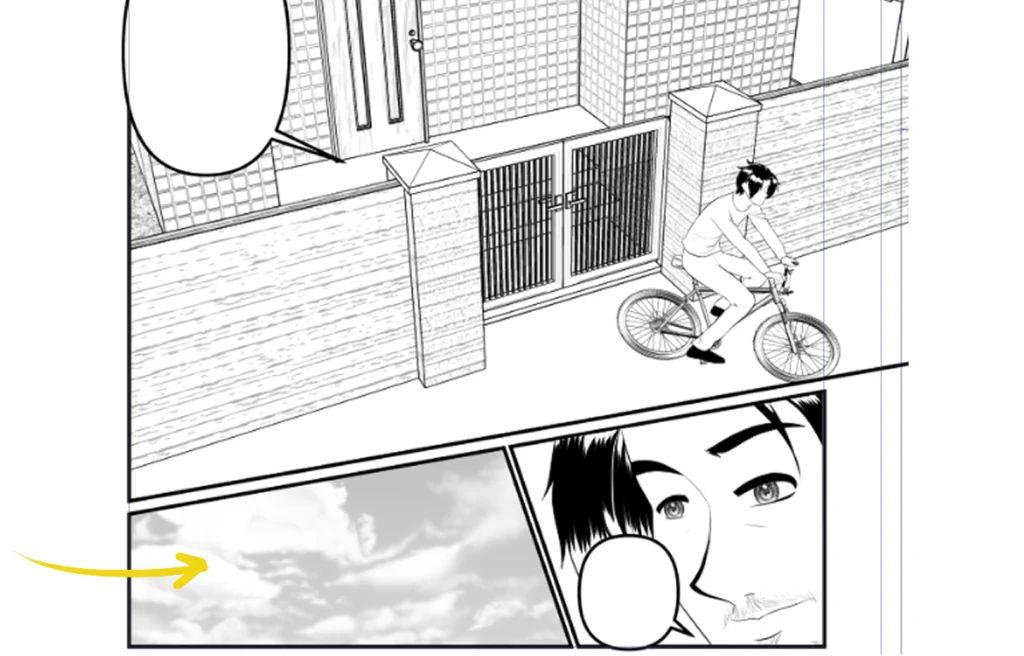
There's nothing more beautiful than nature, right?! So what if we used it to serve our manga? What I love most about it is how it showcases the natural surroundings of the character and the environment they inhabit. Here are some examples:
- A shot on a tree trunk can give a sense of calm, with or without the addition of speech bubbles.
- A shot of the sky, which is very appropriate so that we can show the readers the current time, whether it is morning or evening.
- A close-up shot of a vase or a rose, and it is preferable to add dialogue to the scene. This is suitable for scenes in which a serious and fateful conversation takes place between two people.
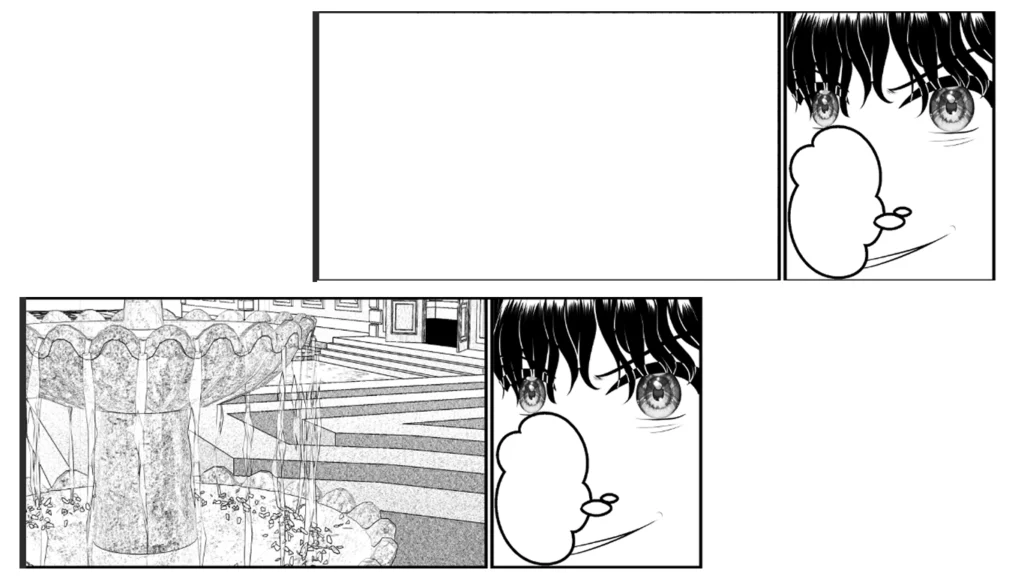
Blank boards
This type of illustration will reveal your emotional side, as it is closely linked to portraying the characters' feelings and deep dialogues, making them stand out more. For example, if the protagonist is talking about a tragic event in his past, you can leave the scene blank, without any illustrations, leaving only the dialogue. In this case, you will leave it to the reader's imagination to fill in the scene themselves.
What's great about blank canvases is that they give you a degree of control over the pacing of the story and the ability to manipulate the reader's emotions. For example:
- Blackboards: It can indicate an emotional and sensitive state that the manga character is going through, especially one related to despair or deep sadness.
- whiteboards: Suitable for scenes from the past, or for talking about a dream the character had, for example, or a moment of clarity experienced by the manga's heroine.
- Camouflaged, decorated, or scribbled paintings: Use it when the character is in a state of confusion and bewilderment, and you will hit the reader deep!.
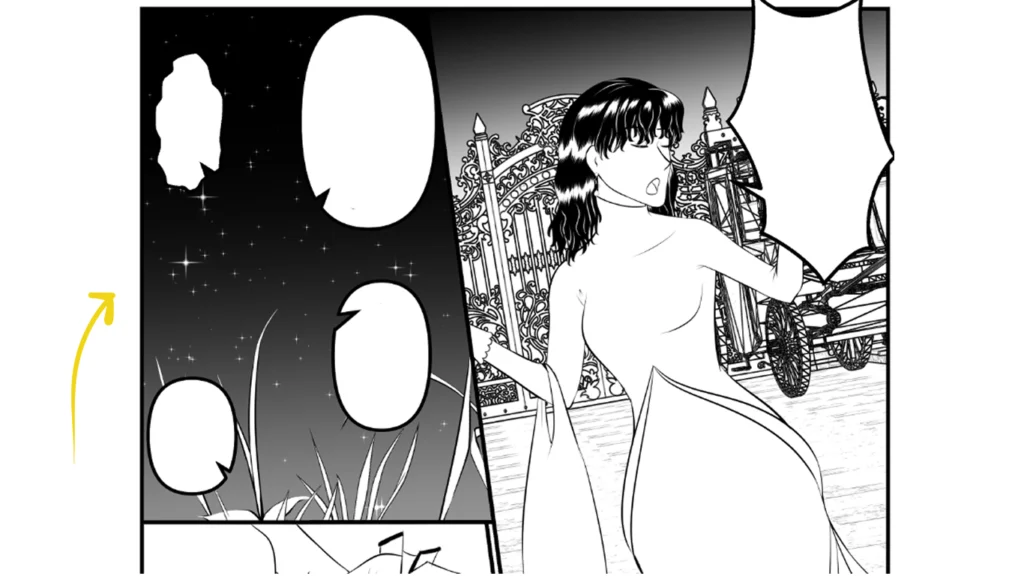
Moving from one place to another
We can use transition panels when moving from one place to another. For example, if the manga is currently taking place in a room, and you want to shift the reader's attention to another location, instead of a sudden change, add a panel showing the new setting. This way, readers will appreciate the gradual progression of events without being confused by the new location.
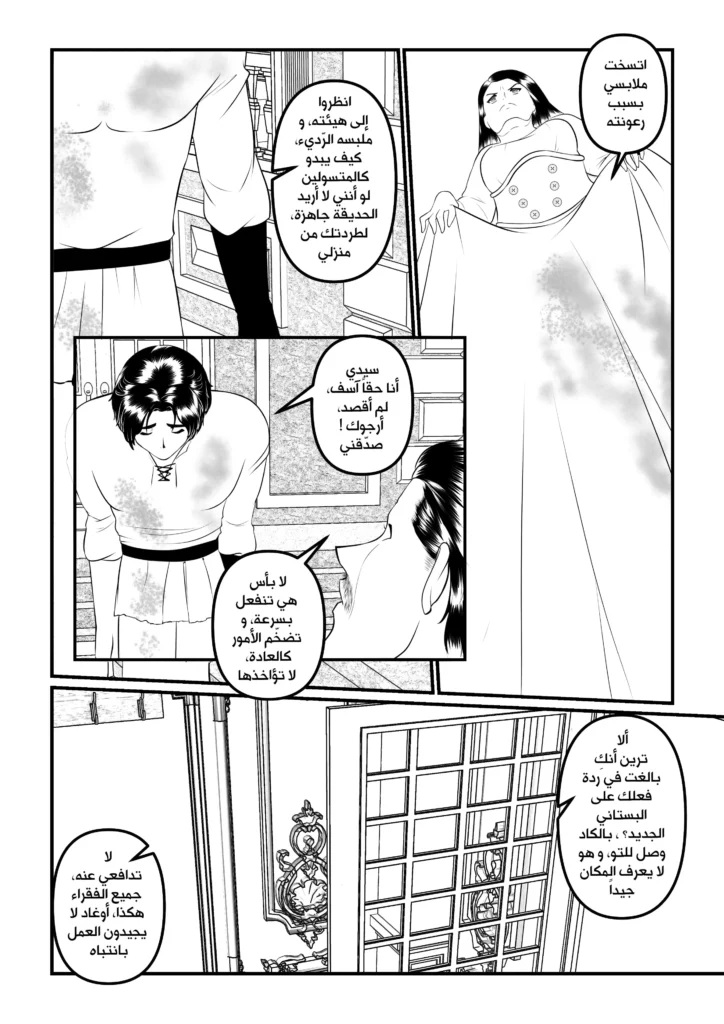
The benefit of it
- These panels will help you so that readers do not feel overwhelmed or overwhelmed by too many events.
- A good opportunity to show World Building Or the environment surrounding the story in a clever way, in case you haven't had the opportunity before.
- It relieves you of the burden of drawing, as it is free of any complex characters or details.
How to write a manga story and develop character structures
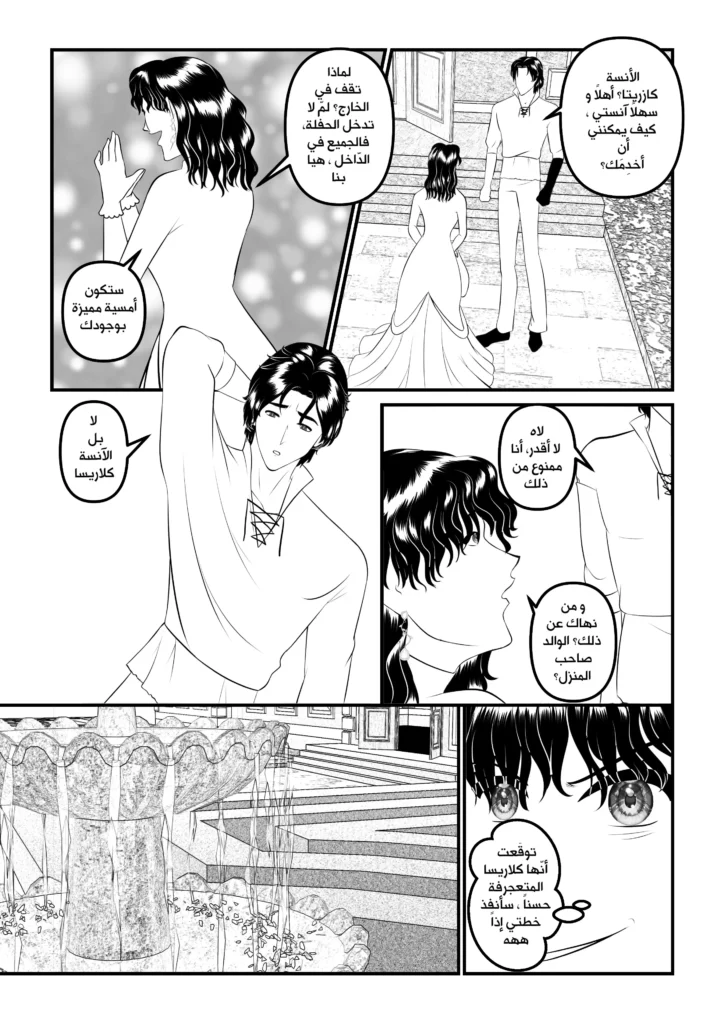
Note: You can add more than one break panel at a time, for example, the first one is a view of the city from above, and the second is a close-up shot of the store where the characters are located, but do not exceed three at a time, so that the reader does not get bored.
That was today's post, and I'm almost certain this is the only article online that discusses transition scenes and break panels in the world of manga and webtoons. So, I'm very happy to share these ideas with you, and I hope you'll apply them to your manga to see the difference. And with that, we've come to the end of today's article. I hope to see you in future lessons, God willing.